
Alpha-gal doesn’t follow the rules.
That’s why it’s so often missed.
Alpha-gal reactions are often delayed (commonly 2–8 hours after exposure), but not always. Some people experience earlier or primarily gastrointestinal symptoms, and cofactors like exercise, alcohol, NSAIDs, stress, or illness can change timing and severity.
We provide clinician-guided testing, education, and optional tracking over time — focused on clarity, not fear-based rules.
Alpha-gal may be one piece of a broader immune pattern. Allerim Immune Core helps map immune load across foods, cofactors, and symptoms for precision next steps.
Start with the full immune evaluation.
Alpha-gal often travels with other immune patterns. A broader review can help clarify your full threshold profile.
How alpha-gal unfolds

It often starts with a tick bite
Alpha-gal is triggered by certain tick bites. The immune system becomes sensitized to a sugar found in mammalian foods.

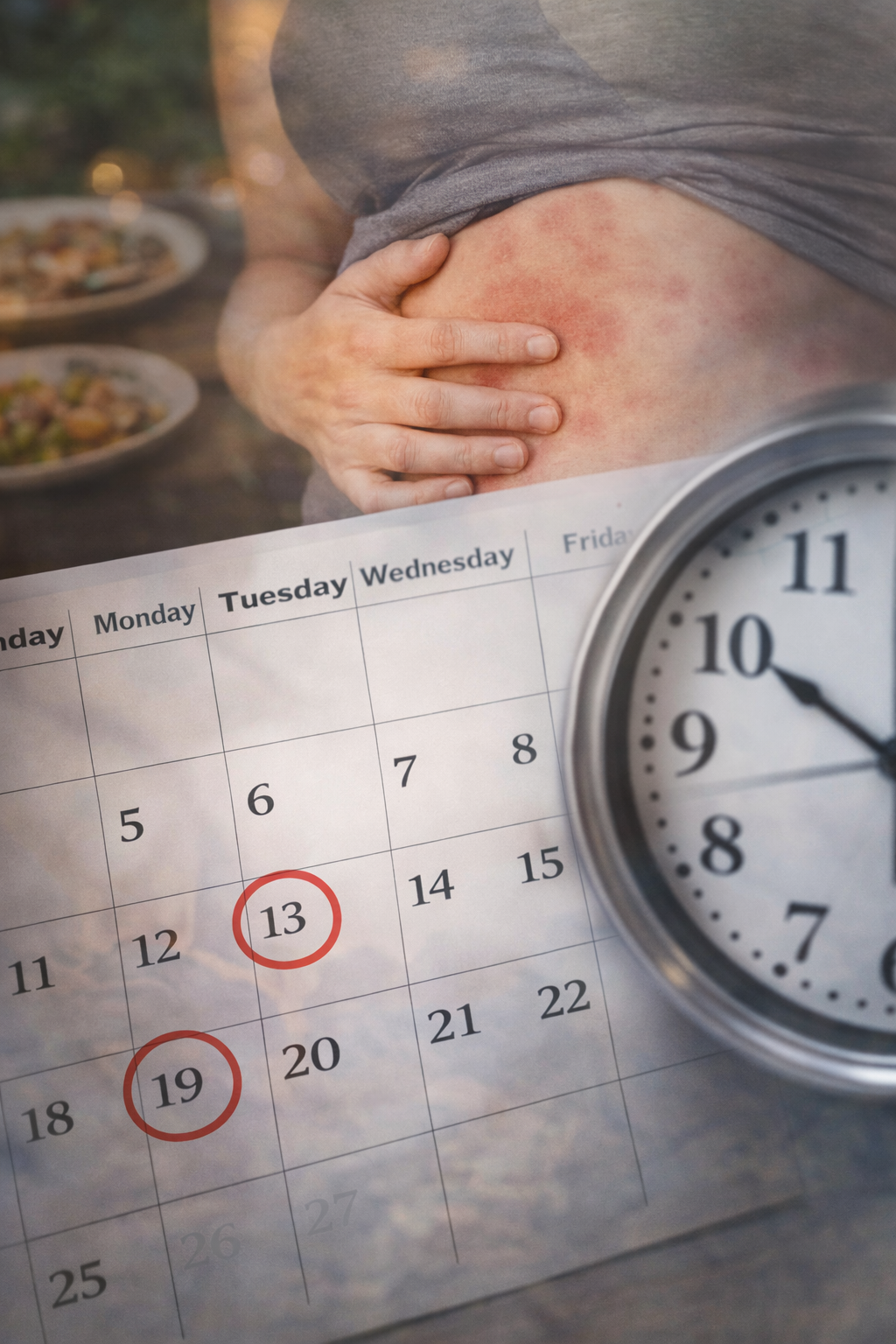
Reactions don’t happen right away
Unlike classic food allergies, symptoms may appear hours later — often overnight.

Symptoms feel unpredictable
Reactions can involve skin, gut, breathing, or fatigue. Timing and severity can change from day to day.
Patterns are easy to miss
Because reactions are delayed, many people never connect their symptoms back to food.

Context changes the reaction
Alcohol, exercise, illness, stress, medications, and meal fat content can amplify symptoms.
The pattern matters more than a moment
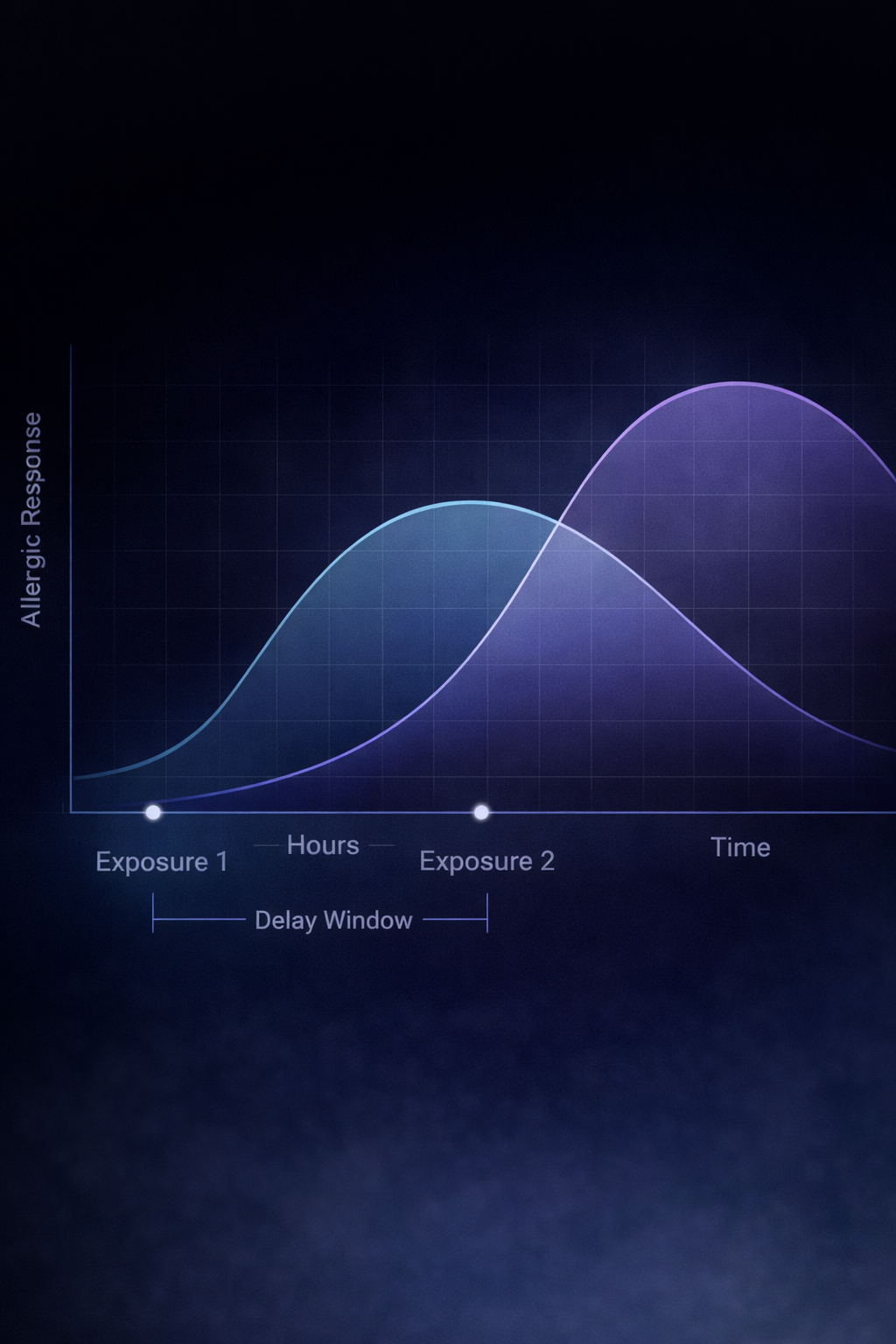
Alpha-gal isn’t about a single exposure. It’s about trends, timing, and repetition over time.

Clarity comes from interpretation
Testing is one signal. Understanding happens when results are paired with history, timing, and context.
Current Updates
Latest Alpha-gal News
Real-time research headlines plus an everyday living section for practical resources.
Why timing feels different
Why alpha-gal doesn’t behave like other food allergies
Delayed reactions and shifting cofactors make alpha-gal hard to spot without a longer view.
Signal over time
Alpha-gal responses can surge late, arrive early, or overlap — the pattern matters more than a single moment.
Want the bigger immune picture?
Alpha-gal may be one piece of a broader immune pattern. Allerim Immune Core helps map immune load across foods, cofactors, and symptoms for precision next steps.
- Immune Profile (Food Wizard) to capture timing + cofactors + symptom patterns
- Personalized testing recommendations (not one-size-fits-all)
- Immune Plan outputs: avoid / cautious / ladder / tolerated
- Optional tracking over time
Recognition
If this sounds familiar, you’re not alone.
Alpha-gal often looks like this — even when it doesn’t fit the textbook.
- “I react hours later — often at night”
- “Sometimes I get cramping or diarrhea within 20–30 minutes”
- “My reactions change from meal to meal”
- “My labs don’t always match how I feel”
- “Restaurants feel unpredictable”
- “I’ve been told it’s IBS, reflux, anxiety, or stress”
- “Things got worse after a tick bite”
- “Hives or itching show up hours after eating”
- “Fatty red meat seems to trigger worse reactions”
- “Flushing or swelling appears without a clear pattern”
- “Supplements or medications sometimes set it off”
- “Severe reactions without a clear cause”
How Alpha-Gal Reactions Actually Work
Alpha-gal doesn’t follow one timeline — and that’s why it’s so often misunderstood.
Reactions Don’t Follow One Clock
Some people experience early gastrointestinal symptoms — nausea, cramping, diarrhea, or reflux — within 30–60 minutes. Others develop symptoms hours later, often during the night. Many experience both, depending on exposure, dose, and cofactors.
Why Symptoms Feel Inconsistent
Alpha-gal reactions don’t look the same every time. They can appear as GI distress, flushing, hives, anxiety, brain fog, chest tightness, reflux, or sleep disruption. Alcohol, exercise, illness, stress, medications, and portion size can amplify reactions — or change how they show up.
Clarity Comes From Patterns, Not Single Events
No single reaction tells the whole story. Alpha-gal becomes clear when timing, repetition, cofactors, and immune signals are viewed together — over time, not in isolation.
Alpha-gal rarely announces itself clearly. It reveals itself through patterns.
What AlphaGalTest Helps You Make Sense Of
What AlphaGalTest Helps You Make Sense Of
Because alpha-gal reactions don’t follow one rule — or one system.
Early & Delayed Food Reactions
Immediate GI symptoms, delayed nighttime reactions, or both — all can be part of alpha-gal.
Variable Symptom Presentation
Why the same food can cause different symptoms on different days.
Amplifiers & Cofactors
How exercise, alcohol, illness, stress, sleep loss, and portion size influence reactions.
Immune Signals Over Time
Why alpha-gal is identified through trends and patterns — not a single moment.
Alpha-gal sits at the intersection of immune response, metabolism, and timing. Clarity comes when early signals and delayed reactions are seen together — with context.
Testing, interpretation, and guidance are delivered through secure messaging.
If you have trouble breathing, throat swelling, chest tightness, fainting, or severe reaction symptoms, call 911 or seek emergency care. This page and testing are not for emergencies.